In an era where urbanization is accelerating and natural landscapes are steadily shrinking, reconnecting people with nature has become a crucial design challenge. Biophilic design addresses this need by integrating natural elements directly into architecture—creating environments that support human well-being, reduce stress, and elevate everyday experiences.
Biophilic design is far more than adding plants or greenery. It draws inspiration from nature’s principles—natural light, organic materials, flowing air, water elements, earthy textures, and biomorphic patterns—to create spaces that feel alive and emotionally restorative. Studies show that biophilic environments improve productivity, enhance cognitive performance, and contribute to healthier lifestyles, making this approach essential for the future of modern architecture.
From green façades and rooftop gardens to daylit courtyards, fluid indoor–outdoor transitions, and natural material palettes, biophilic architecture transforms buildings into holistic, sensory-rich environments. In modern cities, where people often experience nature as a luxury, biophilic design helps bring balance back to urban living.
At Telamon Design Consult, biophilic design is an integral part of our commitment to creating meaningful, human-centric spaces. Our approach blends architecture, nature, and wellness, ensuring that every project nurtures both function and experience.
We incorporate biophilic design through:
Maximizing natural light with strategically placed windows, skylights, and sun-responsive façades.
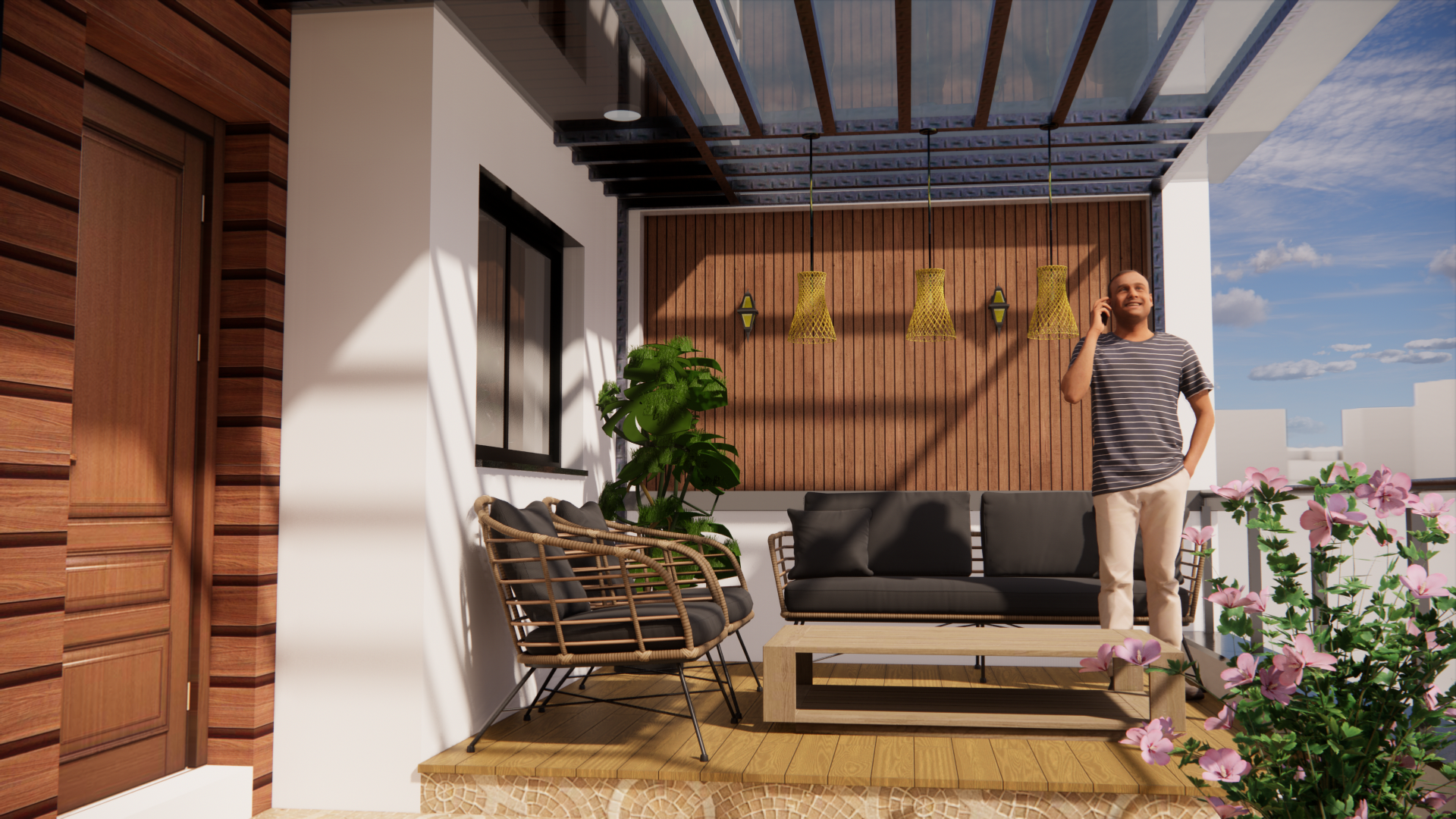
Seamless indoor–outdoor connections through terraces, courtyards, balconies, and garden interfaces.
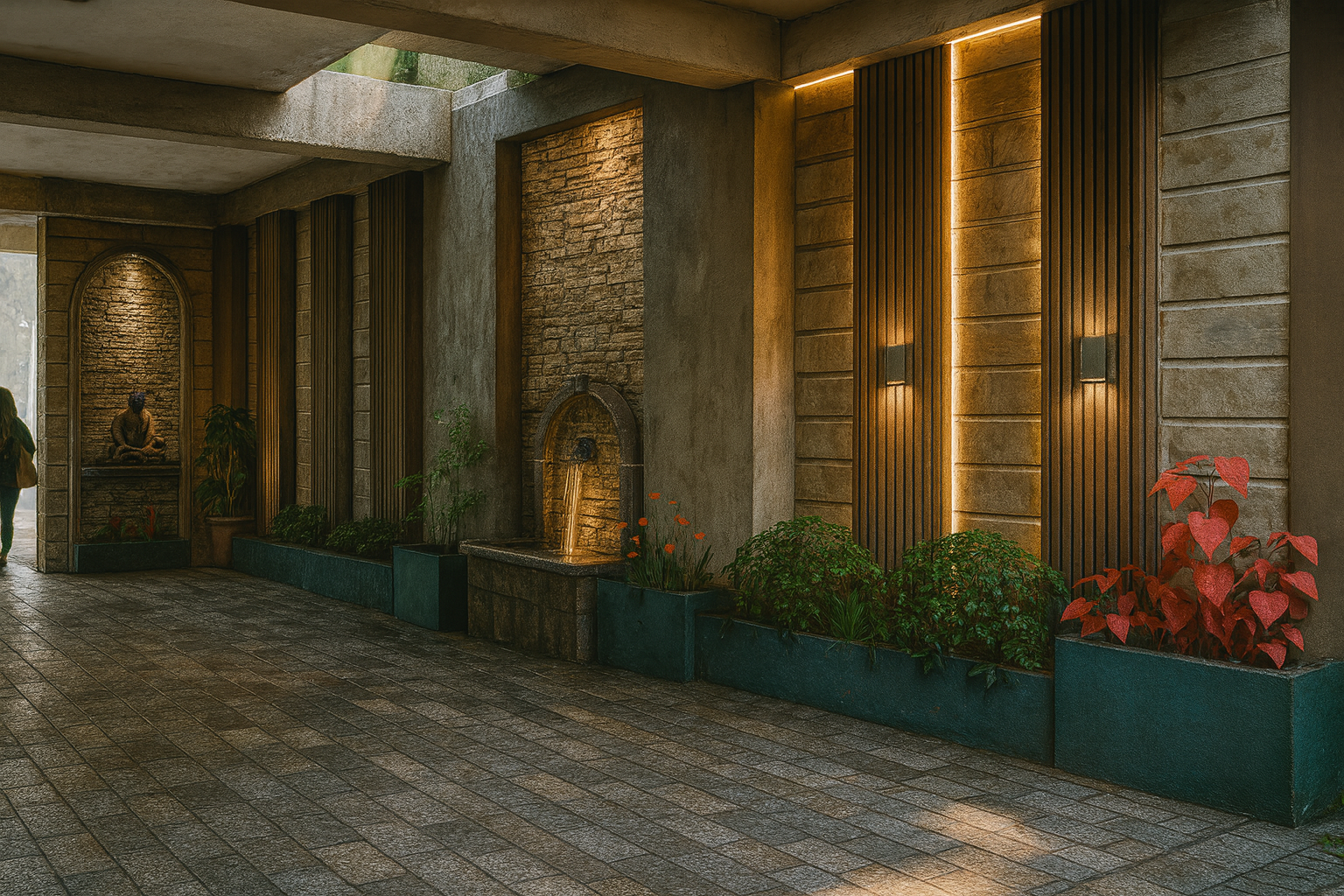
Use of natural materials such as wood, stone, bamboo, and textured finishes that evoke warmth and authenticity.
Vertical gardens, living walls, and rooftop vegetation integrated into building envelopes and communal spaces.
Biomorphic forms and natural color palettes to create calming, nature-inspired interiors.
Water features and natural airflow strategies that enhance sensory appeal and environmental comfort.
Through these elements, we design spaces that feel peaceful, inspiring, and grounded—places that support well-being while celebrating the timeless relationship between humans and nature.